
Case Study: BUILDING A NATIONAL LEARNING ECOSYSTEM FOR LOCAL LEADERS
Led the design and launch of a national learning ecosystem serving 1,200+ community-based organizations across 48 states and Washington, DC.
Replaced fragmented training with a structured, scalable system.
The Academy connects courses, tools, and learning pathways into a cohesive experience that supports real-world application, reduces friction for local leaders, and builds long-term capacity.
This case study shows how I designed the system, made key decisions, and delivered measurable impact.
Overview
Role
Manager of Instructional Design
End-to-end design, development, and execution
Timeline
9 months
Initial launch phase
Audience
Local Main Street leaders
Program directors, volunteers, community stakeholders
context
National nonprofit supporting 1,200+ organizations, focus on workforce development and leadership training
39 COURSES
19x
Designed and launched in 9 months
Increase in monthly learner participation
300%
SCALABLE
Enrollment target surpassed
Established for ongoing development
The challenge
Training existed, but it was fragmented, difficult to navigate, and not aligned with how local leaders actually work.
What we heard from the network
Local leaders didn’t need more information, they needed usable tools.
They asked for templates, checklists, and structured guidance they could apply directly in their day-to-day work.
system gaps
- Learning was spread across multiple platforms with no central access point
- No clear progression for learners at different stages
- Limited infrastructure to support scalable course development
resulting impact
- Valuable knowledge remained underutilized
- Participation was low relative to network size
- Leaders lacked clear, practical support in time-constrained roles
Design Opportunity
Create a centralized learning ecosystem that connects content, tools, and pathways—supporting immediate application and long-term capacity.
Constraints & complexity
DESIGN UNDER CONSTRAINT
These constraints shaped how the system was designed, what was prioritized, and how the Academy was launched.
Constraint: Platform and learning ecosystem developed in parallel
Built the LMS and learning system simultaneously, requiring continuous alignment between platform capabilities and instructional design decisions.
Constraint: Wide variation in technical skill and buy-in
Designed for a national network with uneven digital readiness and skepticism about online learning value.
Constraint: Fixed launch expectations
Delivered a full Academy launch within months as the organization’s first instructional design role.
Constraint: Limited and unpredictable SME availability
Developed structured workflows to support efficient, repeatable collaboration across distributed subject matter experts.
Constraint: Limited and unpredictable SME availability
Developed structured workflows to support efficient, repeatable collaboration across distributed subject matter experts.
sYSTEM DESIGN
The system was designed to reduce friction for local leaders while delivering practical, immediately usable value.
It prioritizes clarity, usability, and real-world application over content volume.
In response to these constraints, the Academy was structured as a layered learning ecosystem.
Learning Ecosystem structure
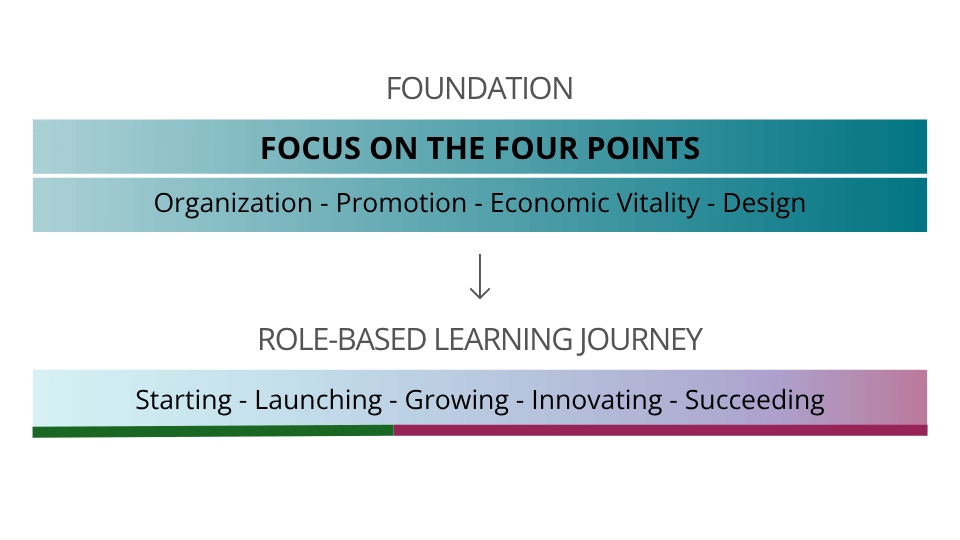
The ecosystem is structured as two connected layers:
Foundation
free, accessible learning through the Focus on the Four Points series
Progression
a role-based learning journey with increasing depth, including advanced and paid offerings
Key Design Principles
These principles guided how the system was designed, built, and scaled.
Outcome-Driven Learning
Courses are built around templates, plans, and tools that support immediate, real-world use.
Meet Learners Where They Are
Multiple formats support different needs, schedules, and levels of experience.
Phased System Design
Foundational learning expands into role-based progression and advanced, project-based experiences.
Scalable SME Collaboration
Structured workflows enable efficient, repeatable development with distributed subject matter experts.
Build Strategy
Focused on delivering clear, useful learning quickly while building a system that scales over time.
key decisions
These decisions shaped how the system was built and directly influenced adoption, usability, and long-term scalability.
Designed for outcomes
Courses were structured around practical outputs—templates, plans, and tools—rather than information delivery.
Tradeoff: Required more design effort to ensure outputs were usable.
Built a phased learning ecosystem, not standalone courses
The system connects foundational learning to role-based progression and advanced, project-based experiences.
Tradeoff: Required more upfront planning across content areas.
Prioritized a strong MVP to drive adoption
Initial launch focused on high-value, accessible learning to establish credibility and encourage early engagement.
Tradeoff: Deferred more advanced or highly produced experiences until after launch in the Growing through Succeeding phases.
Designed in parallel with platform development
Course structure and user experience were aligned with an evolving LMS during active development.
Tradeoff: Increased design effort to ensure outputs were usable.
Execution
I led the end-to-end design, development, and execution of the learning ecosystem, building courses, resources, and supporting systems from the ground up. As the organization’s first instructional design role, I established the approach and executed from concept through launch.

Learning Experiences Design
Developed 39 courses (and counting) using Articulate Rise and Storyline, including interactive scenarios and decision-based pathways to support applied learning.
Tools & templates
Created templates, checklists, and toolkits embedded directly into courses to support immediate real-world application.
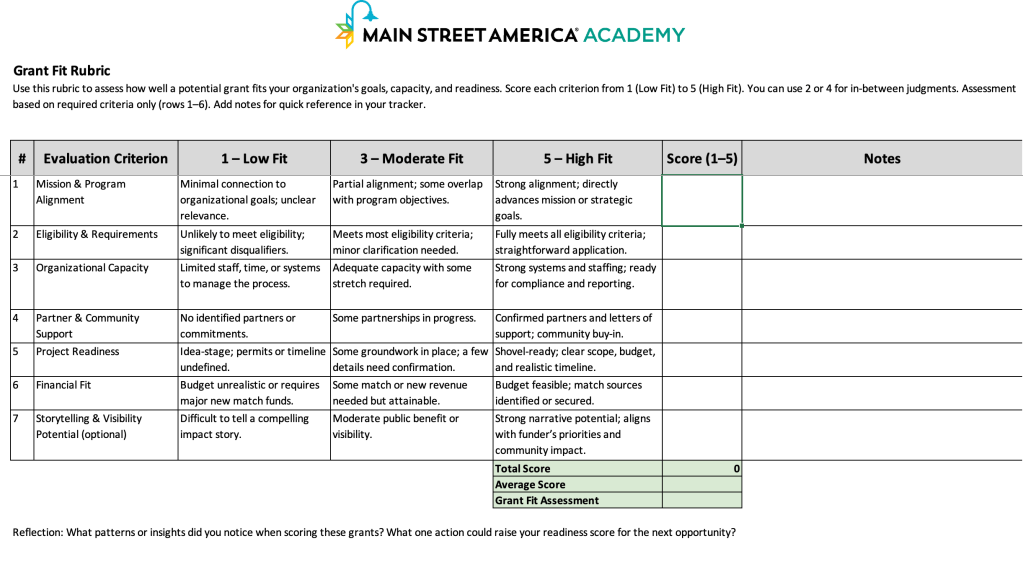
system architecture
Built the Focus on the Four Points series and a role-based learning journey from Starting through Succeeding.
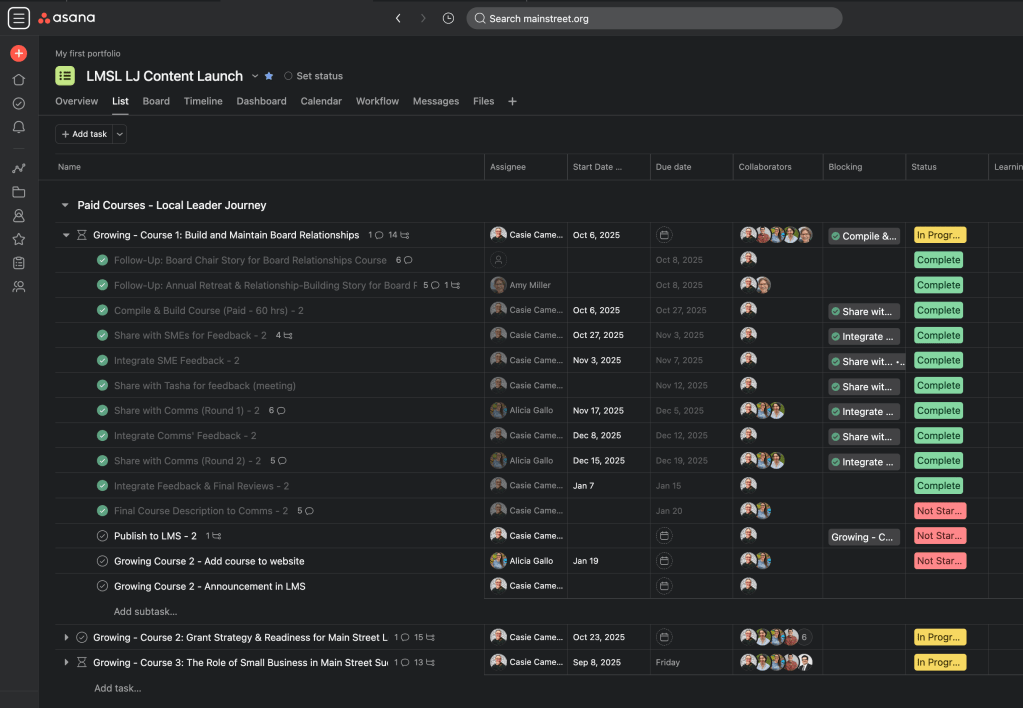
sme workflow
Developed structured workflows to support efficient, repeatable collaboration with subject matter experts.
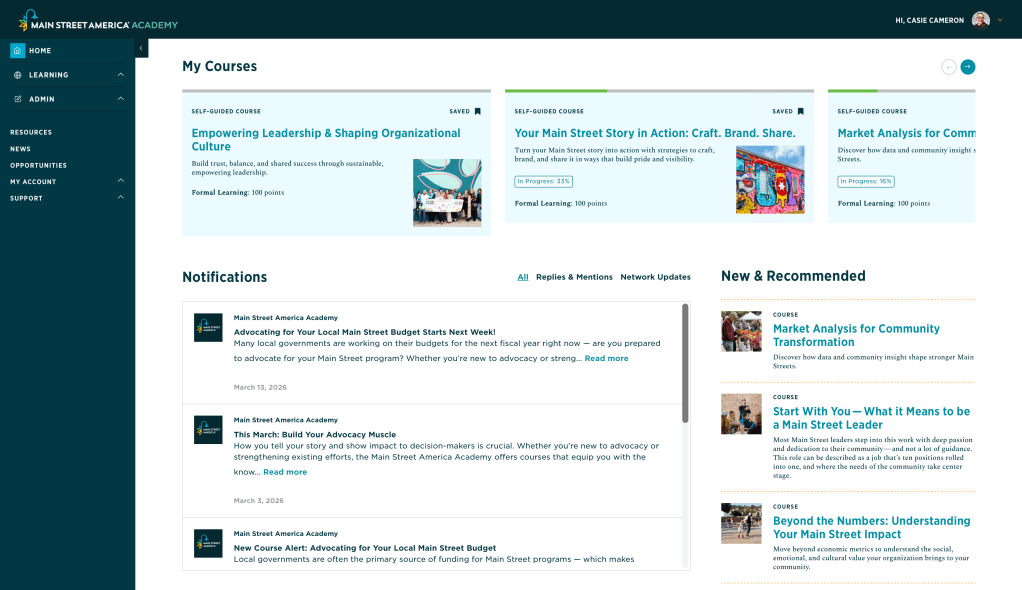
platform & data integration
Aligned course design with LMS development, supporting testing, iteration, and xAPI-based tracking.
delivery model
Developed repeatable course development workflows, enabling parallel production across multiple subject areas while maintaining consistency and quality.
impact
The Academy was adopted across a national network of state programs in 48 states and Washington, DC.
State coordinators integrated courses into onboarding, used them to support local leaders and build capacity, and shared them with small business communities.
Required Training
State programs integrated Academy courses into required training structures.
Accountability
Programs used the Academy to support tracking and participation.
Ongoing engagement
Leaders requested onboarding sessions and continued support.
what leaders said
“This is a huge gift to the Main Street movement… I envy the new director who has these resources at their fingertips.”
Isaac D. Kremer, MSARP
Founding Executive Director, Experience Princeton
“I fully expect this program to increase my capacity in life-changing ways.”
Shari A. Davis
Nevada Main Street
Organizational impact
The Academy shifted how learning is delivered and accessed across the organization by:
- Centralizing previously fragmented resources into a single, accessible system
- Providing scalable support for overburdened local leaders and volunteer-driven programs
- Creating infrastructure for long-term workforce development and leadership training
next phase:
scaling impact
With the core system established and adoption underway, the next phase would focus on strengthening impact and long-term sustainability.
Strengthen Data and Feedback Loops
Expand the use of learner data, feedback, and xAPI tracking to better understand how courses are being used and where learners may be dropping off or needing additional support. Use this insight to inform ongoing content updates and system improvements.
Deepen Integration Across the Organization
Further integrate the Academy into organizational workflows, programming, and partnerships so that learning is not a standalone resource, but a fully embedded part of how the network operates and develops capacity.
Expand Advanced, Project-Based Learning
Continue building out the Innovating and Succeeding phases of the learning journey with more advanced, project-based courses that support long-term skill development and leadership growth.
Refine Navigation and System Clarity
As the ecosystem grows, continue refining how learners move through the system. This includes improving wayfinding, clarifying entry points, and making it easier for users to identify what to take next based on their role and goals.
Formalize Continuous Improvement Processes
Build out a structured, repeatable process for content refresh and iteration based on feedback, usage data, and evolving network needs.
 Casie Cameron | Digital Portfolio